 Eleanor Marsh
The Beginner Canning Series
Canning for beginners, one jar at a time
Four short, step-by-step books for home canning, from your first jar of jam to pressure canning your garden harvest. Every processing time is sourced from current USDA and National Center for Home Food Preservation guidance.
See the booksHome › Canning for Beginners
The Beginner Canning Series
Read them in order, or start with the method you need. Each book stands on its own.
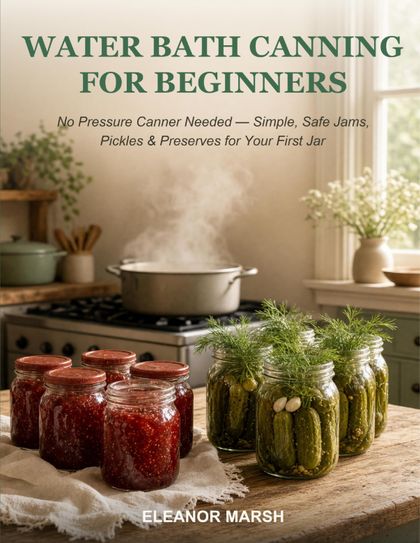
Book 1
Water Bath Canning for Beginners
Start here. Learn the simpler, lower-cost method for high-acid foods like jams, pickles, applesauce and acidified tomatoes, with the six pieces of equipment you actually need, a safety cheat sheet, a processing-time quick reference and a canning log.
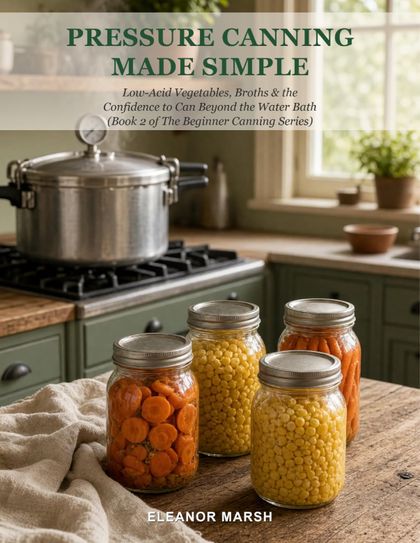
Book 2
Pressure Canning Made Simple
The next step for low-acid foods a water bath can't safely handle: green beans, carrots, corn and stock. Covers dial vs. weighted gauges and the venting, pressure and cool-down steps, one at a time.
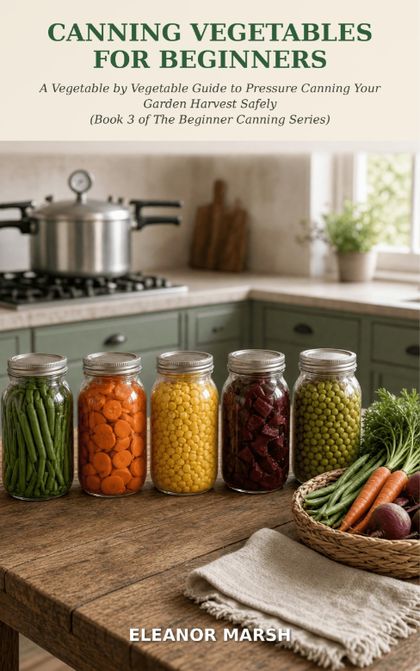
Book 3
Canning Vegetables for Beginners
A vegetable-by-vegetable pressure-canning reference: preparation, pack, jar size, headspace, processing time and altitude-based pressure for beans, beets, carrots, corn, peas, potatoes, squash, greens and more, plus a batch card.
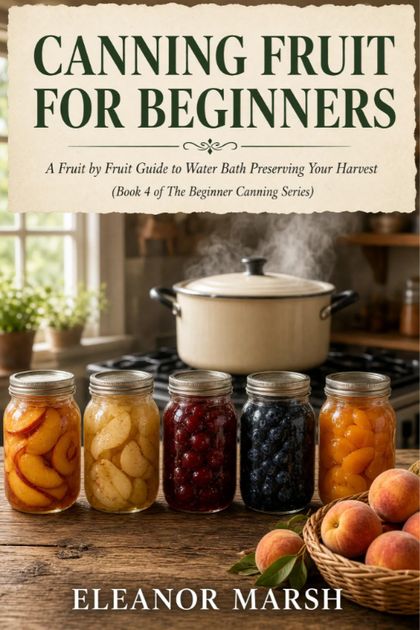
Book 4
Canning Fruit for Beginners
A fruit-by-fruit water bath guide for apples, apricots, berries, cherries, peaches, pears, pineapple and plums: packing liquids, pack styles, elevation schedules and a worksheet for every batch.
Home canning safety: always follow a tested recipe and current USDA / National Center for Home Food Preservation directions for your food, jar size and altitude, and read your canner's instructions before processing. These books are for general information and don't replace those instructions.